DPDP Consent Without the Drop-Off: How to Design a Notice That Still Converts
How BFSI and digital teams collect valid consent under India's DPDP Act 2023 without losing sign-ups. The rules that make consent valid, and the design that keeps both.
By Promiz · Published · 6 min read · Based on the DPDP Act, 2023 and DPDP Rules, 2025 · Not legal advice
You need consent under the DPDP Act. You also need customers to finish the sign-up. Most teams treat this as a trade-off — a long legal checkbox that scares people off, or a quick vague tick that a regulator can throw out. Both lose. This guide shows how to collect valid consent with low friction, and how Promiz ships it in a no-code notice.
First, the hard truth: you cannot “optimise” your way to consent
Reducing friction is good. Reducing choice is not. Under the DPDP Act, consent must be free, specific, informed and unambiguous, given by a clear affirmative action. The moment your design pushes a customer toward “yes”, the consent stops being free — and unfree consent is invalid.
So four common “conversion” tricks are off the table:
- Pre-ticked boxes. The customer took no action, so there is no consent.
- A single “accept all” that bundles service data with marketing. It is not specific.
- A reject option that is hidden, greyed out or three taps away.
- A withdrawal link the customer can never find later.
The real win is not a smaller checkbox. It is a clearer one. Clarity and low friction lift completion and keep the consent lawful.
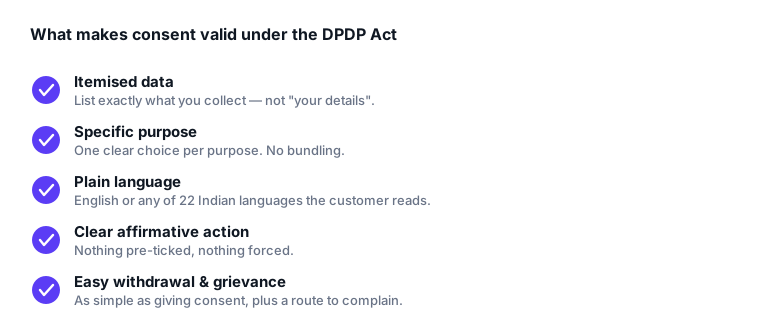
What makes consent valid under the DPDP Act
Before you design the box, know what the box must do. A valid notice and consent flow does five things.
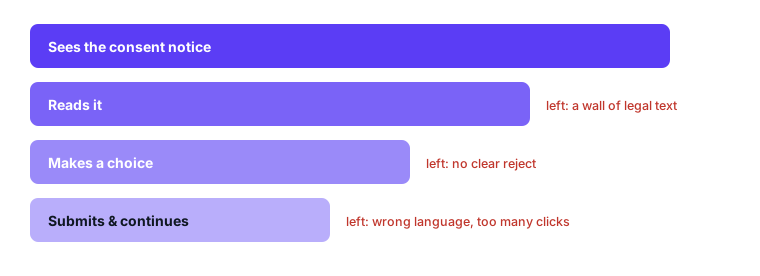
Why the “big checkbox” tanks conversion
Some teams answer the law with a wall. Every purpose, every data field, one long list, one “I agree”. It is legal-looking, and it drives customers away. Each avoidable friction point is a drop-off.
The design that keeps consent valid and friction low
You do not choose between the law and the conversion. You get both by making the choice fast and honest.
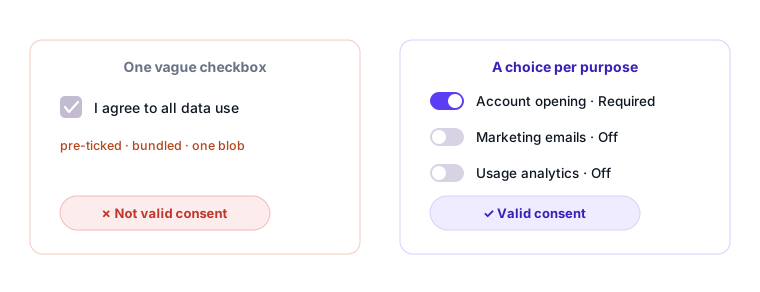
1. Give a real choice per purpose — nothing pre-ticked
Show each purpose on its own line, off by default. Required purposes carry their own basis and are marked as required. This is specific consent, and it is what the Act asks for.
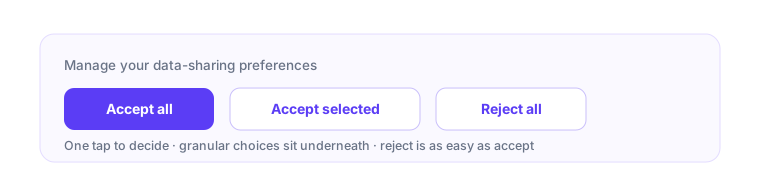
2. Collapse to one tap — keep the detail underneath
Most customers want to decide in a second. Give them three clear buttons and let the granular choices sit below for those who want them. Reject must be as easy as accept, or the choice is not free.
3. Speak the customer’s language
A notice in English only excludes most of India. The Act lets you serve the notice in English or any Eighth Schedule language. Offer a language switch inside the notice, so the customer reads the choice before they make it.
4. Separate required from optional
In BFSI this matters most. Account opening and KYC run on a legal obligation and are marked required. Marketing and analytics are optional and need a free, specific choice. Never make the optional a price of the service.
Mistakes that void consent
| The shortcut | Why it fails under the DPDP Act |
|---|---|
| One “I agree” for everything | Not specific. Each purpose needs its own choice. |
| Pre-ticked boxes | No affirmative action, so no consent. |
| Marketing bundled with the service | Consent is not free if the service depends on it. |
| Hidden or greyed-out reject | A pushed choice is not a free choice. |
| No way to withdraw later | The Act requires withdrawal as easy as giving consent. |
| English-only notice | Most customers cannot read the choice they are making. |
Measure the right things
A good consent flow is a number you can watch, not a one-time build. Track four:
- Completion rate at the consent step. A drop here points to friction, not to the law.
- Reject rate per purpose. A high reject on one purpose means your ask is too broad or unclear.
- Withdrawal rate over time. A rise can mean the first notice over-promised.
- Language mix. If most customers switch language, English-first was costing you.
The test that matters. Could a customer, in ten seconds, see what you collect, why, and how to say no — in their language? If yes, you have low friction and lawful consent at the same time.
How Promiz ships this
Promiz turns these principles into a no-code notice you publish once. You write the binding consent text and set a purpose, a legal basis and a retention period for each choice. Promiz serves it as a banner, a form panel or an emailed request, in English and 22 Indian languages, with the customer able to switch language inside the notice.
Every opt-in stores the notice version, a text fingerprint and a snapshot of the screen the customer saw — so you can always show what they agreed to. Withdrawal sits in the banner and in a self-service privacy portal, and a withdrawal opens a stop-processing task that reaches your other systems by signed webhook. That is a consent flow that converts, and that holds up when the Data Protection Board asks.
Key dates. The DPDP Rules, 2025 were notified on 13 November 2025. Notice, consent, rights, security, breach and erasure duties apply in full from 13 May 2027. Confirm the dates that apply to your firm with your legal team.
Questions teams ask
Can I use a single “I agree” checkbox?
No. Consent must be specific. One checkbox that bundles many purposes fails that test. Give a separate choice per purpose.
Can boxes be pre-ticked?
No. Consent needs a clear action from the customer. A pre-ticked box is not their action, so it is not consent.
Does cutting friction risk invalid consent?
Only if you cross from clarity into pressure. Fewer clicks and plain language are safe and help. Pre-ticking, bundling, a hidden reject or a buried withdrawal are not.
Which languages must the notice support?
English or any Eighth Schedule language. Promiz covers English and 22 Indian languages, with an in-notice switch.
Do I have to offer a reject button?
You must not force a customer to accept optional purposes to use the service, and declining must be as easy as accepting. In practice, that means a clear way to say no.
Promiz supports your DPDP compliance programme. It is not legal advice. Your legal team decides purposes, lawful bases and retention periods.